10 Comments

Little Big Man

(April 30 is the day the Canadian government has chosen to commemorate the acceptance of 60,000 Boat People into Canada in the early eighties when North Vietnam took control of that country under communist rule. This short story is a piece of historical fiction by David Hughes http://straightspeak.com  Memoir, the focus of my blog, is generally true stories; however, sometimes the truth can be more compellingly revealed through the weaving of truth and fiction. All the memoir details about Mr. Ngo are factual.)
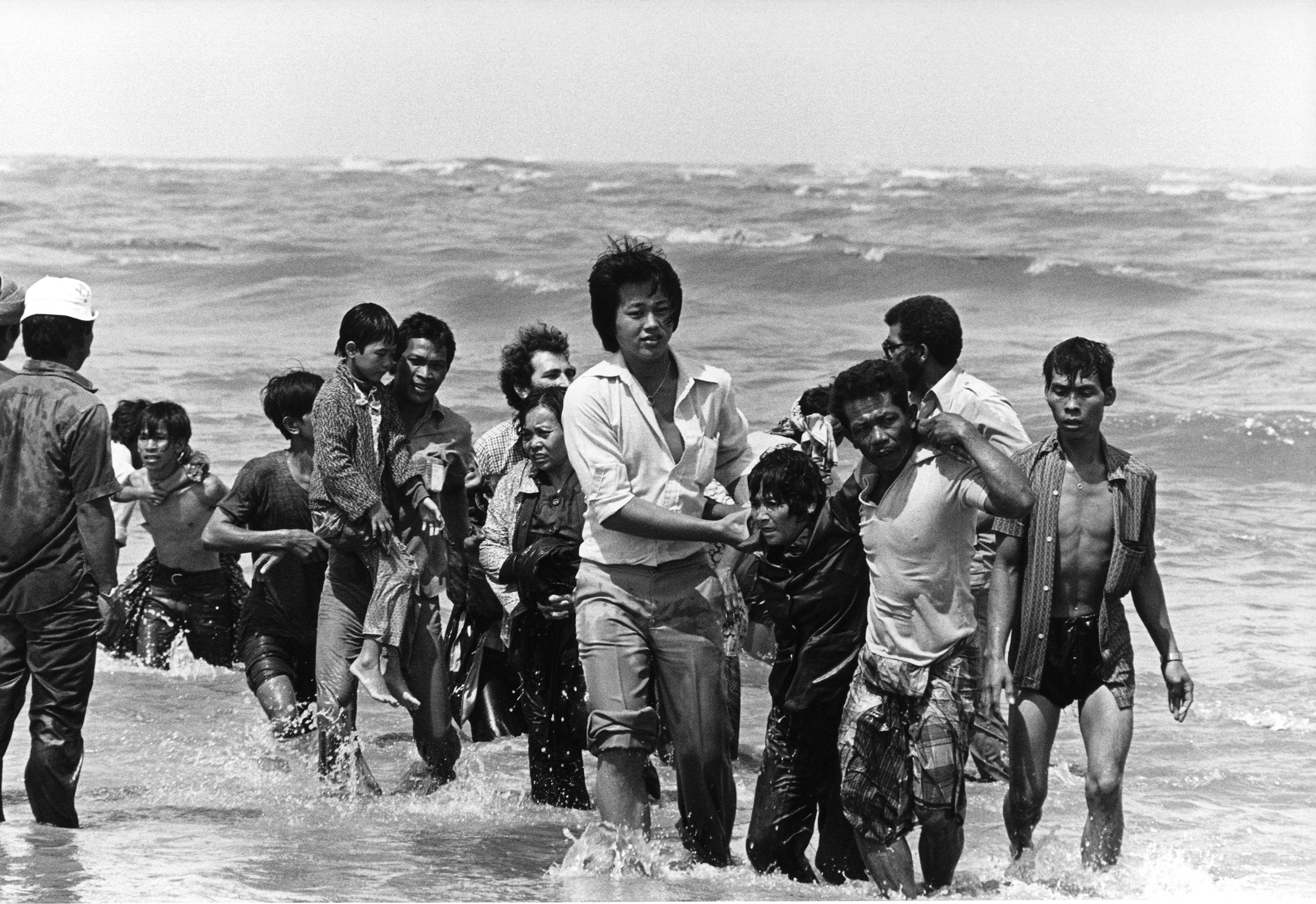
Vietnamese Boat People

Vietnamese Boat People

I’ve seen him before. Not often, but before. Diminutive. He’s maybe a hundred-and-twenty pounds and just a head higher than the counter. And today he seemed even smaller, standing in line between two strapping, thirty-something, white guys—truck drivers probably—looking as if he might be crushed if the line moved too fast. And everybody was in a rush for a coffee hit. It wasn’t eight o’clock yet, and no coffee meant an edgy line of single-minded addicts grumbling their way to a caffeine rush with a sugar chaser. Me too. I love my toasted cinnamon bun with its icing swirl that transforms into white drool and sticks to my fingers like flypaper. It sits right next to my medium, not-too-large, not-too-small, double-double. Just the three of us hanging out at our usual observation station watching the locals gather like cattle, chewing on their morning ritual. A process that goes on for hours, sucking the coffee, tea, sugar and flour out of the Doughnut King’s kitchen in trade for a few dollars of hard-earned pay or unemployment benefits. Young, old, big, small, odd, ordinary—mostly odd—trudging across the morning stage in a performance that is re-enacted every day in thousands of doughnut dispensaries across the country. It’s big business. What addiction isn’t? I come at least three times a week to slurp and watch. Never on Sundays.

He comes by bicycle. One of those foreign ones. Black. Simple. Dilapidated. It’s a girl’s bike, no crossbar. I guess he’s too small to get up over the crossbar on those man-mountain bikes. He leaves it on the far side of the parking lot. Up against a tree. Doesn’t lock it. Who does that today? Only a trusting fool. I tell myself to keep an eye on his bike.
Continue Reading »

6 Comments

Editing an Arctic Memoir

(UPDATE! UPDATE! In 2018, Native Born Son  was published. It’s wonderful!  I highly recommend it. It will give you an authentic feeling for what life was like for some of the Arctic’s first peoples by a man who lived with them, and loved and respected them.)

You know how attics can contain hidden treasure? When Marnie Hare Bickle moved into her new house north of Port Hope, Ontario, she rummaged around in the attic and found a cardboard box filled with papers. Heart racing, she discovered rough copies of memoirs written by the former owner, David Ford. Actually, there were several versions of them, and a box of all his letters from WW ll. She sorted and read all the letters first, then plunged into the mystery of the memoirs.

David Ford was born in 1910 in the East Arctic to a family of several generations of Hudson Bay Company traders and managers. His father was highly respected and spoke the language of the Eskimos (Inuit) and Indians (Innu) he served. David grew up with the native children where they lived, hunted seal and caribou with them, learned the ways of wolves and polar bears, and travelled by dog sled and kayak.

Continue Reading »

7 Comments

Wild: A Memoir by Cheryl Strayed

I was pleased and honoured when I heard that my local Hospice group, where I am a volunteer, included my book review of Wild, from Lost to Found on the Pacific Crest Trail  in the course they give to new volunteers.

I haven’t yet read a memoir where love and loss are not crucial to the story. There are many kinds of love. Love of freedom (read: Something Fierce by Carmen Aguirre), love for a gorilla (read: Virunga by Farley Mowat), love for one’s fellow man (read: I Shall Not Hate by Izzeldin Abuelaish), love for a daughter (read: Blue Nights by Joan Didion). The list is long. We all seek love! Is hate the opposite of love? Or, is it loss? Often, it is fear.

Reading a memoir enables us to understand that there are many varied and valid reactions to a universal event. We become more empathetic, tolerant, wise. I became well acquainted with sadness and rupture when my mother died. Tears poured for a month. Then, she seemed more distant – perhaps off on an astral mission – and I realized I was at peace. Reading Cheryl Strayed’s exquisite story of losing her mother opened my eyes and heart to another’s loss of another mother. So very different. Yet, we’d both lost the same mother figure, same first role model, the woman who had wombed us, shed her blood for us.

Continue Reading »

4 Comments

Does Your Name Tell a Story?

I suspect that many people reading these words are toying with the idea of writing a memoir. When it comes to putting it all together, where do you start?

If there is something intriguing about your name, that could be a good opening. Names can have much history, even tragedy. Names can lie, hide the truth, hide history, honour the past, give shelter, give hope. A birth name, as you will see,  can represent freedom – freedom from oppression, freedom of speech.

Olga Szaranski recorded her story with me a few years ago, and published several copies of it for her family. Eighty-six at the time, she addressed her story to her children and grandchildren, telling them this about her name:

Some of the flavour and temperament of your ancestors shows up in the name my parents gave me at birth. My full and formal name is Wolja Grigorovna Trofimova. Wolja (pronounced Vola) means Freedom in Ukrainian. This was not a name that anyone gave their children, so it is an indication of the free-spirited thinking and fun-loving tendencies in my parents’ personalities. Because it was so different, I always had to spell it, and people often didn’t understand it. Then at 18 when I told the German Nazi official my name, she thought I said Ola, which is short for Olga. That was how I became an Olga. But people who know me from the old days still call me Wolja. A number of people at the time, my parents among them, were glad the Russian aristocracy was gone and some, like my father, were Ukrainian patriots. As my son Alek, who has a quick sense of humour, said one day, “Your parents were hippies!”


Continue Reading »

25 Comments

Ten Reasons for Writing Memoir

In my book, The Gift of Memoir,  the twenty reasons I give for writing memoir are culled from the forty-two I offer in my course. The more reasons there are, the more apt you are to finish your story. Not that all forty-two, or twenty, will be valid for everyone. Are there three or four that seem more relevant to you than the others? Those are the ones that will propel you forward into your story and keep you adding to it.

Here, in this post, I have harvested ten of the best from the list of twenty. I thought I had collected all possible reasons for writing memoir, but recently someone suggested another, and I will start with that one. It is an especially poignant and relevant one in our times because so many people are living alone—especially older people.

1. To dispel loneliness. When you write your stories, usually you have someone in mind to whom you are speaking. You have an audience who will one day receive and read your words. This is communication beyond your own mind with whomever may be there.

Continue Reading »

2 Comments

Time Was Soft There, a memoir by Jeremy Mercer

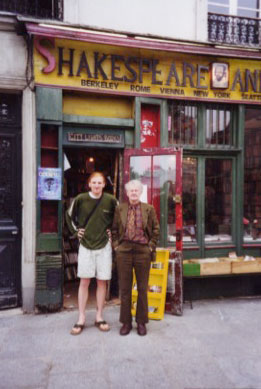
A good memoir is a good mentor when you read as a writer. Time Was Soft There is a romp through literary escapades in one the world’s most famous bookstores, Shakespeare & Co., situated on Paris’s Left Bank. Canadian reporter Jeremy Mercer stumbled in one day, bought a book, and wound up living on the second floor of the store for eight months. Populated with people who live on the edge and on dreams, the store was rife with dirt, thievery, hunger, love affairs and the enormous good will of owner, George Whitman, eighty-six at the time.

jeremy2

I met George when he was just eighty-two. I’d walked into the store on the advice of a friend. Used books were piled ceiling high everywhere. I spotted whom I assumed to be the owner because he looked aged and worn and I’d heard he had started this store half a century ago. He was sitting deathly still on a stool, his thin body tilted stiffly at an angle of about 15 degrees. His eyes were almost closed; his hoary hair was cobweb gray. He looked as if he was ready to breathe his last. I was afraid that if I spoke too quickly or too loudly that the force of my breath would blow him over. In slow speech, that would not offend nor harm the near dead, I began to ask him about a book I was looking for.

Continue Reading »

4 Comments

Crowd Funding My Book

I, who am a nitwit when it comes to computerese (computer-ease), decided to crowd fund the publishing costs of my recent book, The Gift of Memoir. My only other book came out in the last century. That was before we knew that the future would run wild with connections zooming across oceans and galaxies.

Was there a fear factor in venturing into the unknown? Indeed there was. However, I didn’t want to be left behind by technology. And, I knew I would be grateful for any financial assistance with the costs. What I didn’t know was what a huge emotional and psychological support the contributions would be.

Continue Reading »